
This article's table of contents introduction:
- Introduction: What Is a Single Suction Backward CFB Blower?
- Core Components and Material Excellence: Why Stainless Steel?
- Performance at 1450r/Min: Balancing Speed and Durability
- How This Blower Supports Circulating Fluidized Bed (CFB) Boilers
- Key Advantages Over Other Centrifugal Fan Designs
- Installation, Maintenance, and Troubleshooting Tips
- Frequently Asked Questions (FAQ)
- Conclusion: Future Trends and Industry Recommendations
** The Ultimate Guide to Single Suction Backward CFB Boiler Stainless Steel Centrifugal Blower 1450r/Min: Design, Efficiency, and Applications
Table of Contents (Directory Guide)
- Introduction: What Is a Single Suction Backward CFB Blower?
- Core Components and Material Excellence: Why Stainless Steel?
- Performance at 1450r/Min: Balancing Speed and Durability
- How This Blower Supports Circulating Fluidized Bed (CFB) Boilers
- Key Advantages Over Other Centrifugal Fan Designs
- Installation, Maintenance, and Troubleshooting Tips
- Frequently Asked Questions (FAQ)
- Conclusion: Future Trends and Industry Recommendations
Introduction: What Is a Single Suction Backward CFB Blower?
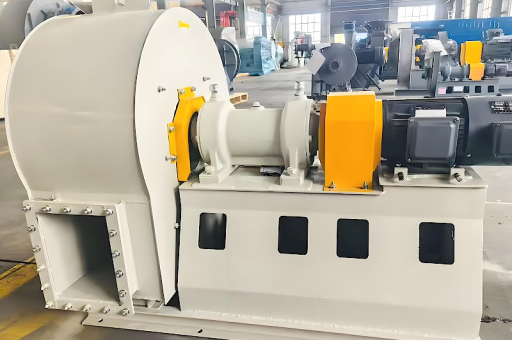
A Single Suction Backward CFB Boiler Stainless Steel Centrifugal Blower 1450r/Min is a specialized industrial fan designed to deliver high-pressure airflow in Circulating Fluidized Bed (CFB) boiler systems. The term "single suction" indicates that air enters the impeller from one side only, simplifying the ductwork and reducing axial thrust. The "backward" refers to the blade orientation—blades curve away from the direction of rotation. This design is widely regarded as the most efficient centrifugal fan configuration for dust-laden environments, such as those found in CFB boilers.
In CFB boiler systems, consistent and robust air supply is critical for maintaining fluidization of fuel particles, combustion efficiency, and temperature control. Operating at 1450 revolutions per minute (r/Min), this blower achieves an optimal balance between air volume and static pressure, making it an industry standard for medium-to-large boiler installations.
Core Components and Material Excellence: Why Stainless Steel?
The decision to use stainless steel for the impeller, housing, and inlet cone is not arbitrary. CFB boilers often burn low-grade fuels, including biomass, coal gangue, and petroleum coke. These fuels generate corrosive flue gases and abrasive fly ash. Stainless steel alloys, such as SS304 or SS316, offer:
- High corrosion resistance: Prevents pitting and rust from sulfur oxides and moisture.
- Thermal stability: Maintains structural integrity at continuous operating temperatures up to 350°C (662°F).
- Erosion resistance: The backward-blade geometry combined with hardened stainless steel reduces wear from particulate impact.
The blower housing is typically precision-welded and stress-relieved to eliminate vibration hotspots. The shaft is often fitted with double-row spherical roller bearings, sealed and lubricated for 24/7 heavy-duty cycles.
Performance at 1450r/Min: Balancing Speed and Durability
The 1450 r/Min speed rating is a deliberate engineering choice. Direct-drive motors at this speed (typically 4-pole induction motors) eliminate the need for belts or gearboxes, improving efficiency and reducing maintenance. At this RPM, the blower can generate:
- Air volume: 10,000 to 80,000 m³/h (depending on impeller diameter)
- Static pressure: 2,000 to 8,000 Pa
- Efficiency: Up to 85% in the best efficiency point (BEP)
Lower speeds reduce bearing stress and noise, while 1450 r/Min remains fast enough to overcome the backpressure from a CFB boiler's dense bed. The backward-curved blades allow the blower to operate in a "non-overloading" power curve, meaning motor overload is unlikely even if duct resistance fluctuates.
How This Blower Supports Circulating Fluidized Bed (CFB) Boilers
In a CFB boiler, the Single Suction Backward Centrifugal Blower serves as the primary air (PA) fan or the forced draft (FD) fan. Its role:
- Fluidization air: Lifts solid fuel particles and limestone into a turbulent, suspended bed. The blower must deliver steady, high-pressure air to prevent channeling.
- Combustion support: Provides oxygen for the combustion of fine carbon particles recirculated via cyclones.
- Temperature regulation: Adjusts air distribution to control bed temperature between 850°C and 950°C, minimizing NOx formation.
The backward blade design ensures that even when handling recirculated flue gas with residual ash, the blower's efficiency drop remains minimal. Stainless steel construction further extends service intervals—typical overhaul periods exceed 20,000 operating hours.
Key Advantages Over Other Centrifugal Fan Designs
| Feature | Single Suction Backward | Forward Curved | Radial (Paddle) |
|---|---|---|---|
| Efficiency | 80-88% | 60-75% | 65-78% |
| Dust tolerance | High (self-cleaning blade shape) | Low (blade loading) | High but lower efficiency |
| Power curve | Non-overloading | Overloading possible | Steep, requires careful motor sizing |
| Noise level | Moderate (reduced by backward blade) | Higher due to turbulence | Lower at low RPM but heavier |
| Corrosion resistance (SS) | Excellent | Often carbon steel | Rarely in stainless |
For CFB boiler duty, the single suction backward design is the undisputed leader—it offers the highest aerodynamic efficiency in a compact footprint while handling particulate matter without blade fouling.
Installation, Maintenance, and Troubleshooting Tips
Installation checklist:
- Mount on a concrete base with vibration isolators (spring or rubber).
- Align the blower shaft with the motor shaft within 0.05mm tolerance.
- Install inlet and outlet ductwork with expansion joints to prevent stress transfer.
- Ensure inlet air filters are installed (if ambient dust is high).
Routine maintenance:
- Weekly: Check bearing temperature and vibration (max 4.5 mm/s RMS).
- Monthly: Inspect impeller for erosion or imbalance (clean accumulated ash).
- Quarterly: Grease bearings (use high-temperature lithium complex grease).
- Annually: Perform a full alignment check and coat internal surfaces with anti-corrosion paint if needed.
Common issues and solutions:
- Vibration increase → Check for ash buildup on blades or worn bearings.
- Airflow drop → Inspect inlet damper or filter; verify motor speed.
- Overheating bearings → Ensure proper grease fill (30-40% cavity) and align drive.
Frequently Asked Questions (FAQ)
Q1: Can this blower operate at variable speed?
Yes. When paired with a VFD (variable frequency drive), the 1450 r/Min blower can modulate down to 600 r/Min, reducing energy consumption during low-load boiler conditions.
Q2: What is the typical lifespan of a stainless steel impeller in a CFB service?
With proper maintenance, 5 to 8 years. If burning high-sulfur coal or high-ash biomass, consider SS316L for extended life.
Q3: Is a backward blower better than an airfoil blower for boiler forced draft?
Airfoil blades are slightly more efficient (88-92%) but are more expensive and less tolerant of ash loading. For CFB, backward curved is preferred due to self-cleaning ability.
Q4: What is the maximum static pressure this blower can achieve?
For a single-stage unit at 1450 r/Min, typical maximum is 8,000 Pa. For higher pressures, a two-stage series configuration is recommended.
Q5: Can I use this blower for induced draft (ID) on a CFB boiler?
No. ID fans must handle hot, corrosive flue gas; they require heavier impeller materials and wear protection. Use a dedicated radial or backward-inclined fan with appropriate alloy.
Conclusion: Future Trends and Industry Recommendations
The Single Suction Backward CFB Boiler Stainless Steel Centrifugal Blower 1450r/Min remains a backbone technology for clean coal and biomass power generation. As CFB boiler designs push toward lower emissions and higher fuel flexibility, this blower type must evolve in three areas:
- Smart monitoring: Integration of IoT sensors for real-time vibration, temperature, and flow analytics.
- Advanced coatings: Ceramic-filled epoxy or tungsten carbide overlays to extend impeller life in extreme abrasion.
- Energy optimization: More efficient impeller profiles (3D reverse engineering) that achieve 90% peak efficiency at 1450 r/Min.
For engineers specifying a new or replacement blower, always request a performance curve from the manufacturer—verify it meets your boiler's full load and turndown conditions. Choose a reputable supplier (e.g., a dedicated fan brand or OEM) that offers a detailed datasheet, including material certifications for stainless steel grades.
For custom sizing or technical drawings, contact your local heavy-duty fan supplier. Remember: correct airflow design ensures not just boiler efficiency, but operational safety.





