
This article's table of contents introduction:
- Understanding the Specification (6761 Pa)
- Best Machine Type: High-Pressure Centrifugal Blower
- Key Selection Parameters (You must provide these)
- Typical Industrial Fan Series Matching 6761 Pa
- "Cement Fan" Specifics for 6761 Pa
- Example Sizing (Hypothetical)
- Final Recommendation
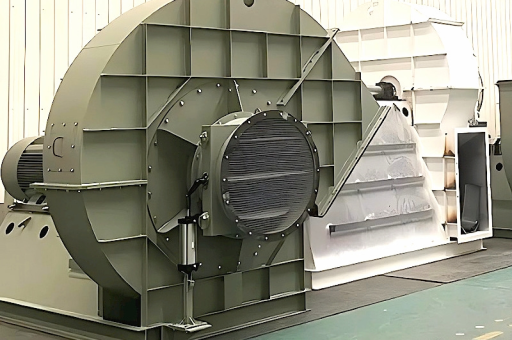
It sounds like you are looking for a centrifugal blower (fan) that meets these specific parameters:
- Application: Air Supply Cooling / Heat Dissipation
- Pressure: 6761 Pa (Pascals)
- Type: Cement (likely meaning the fan housing is made of steel/iron or used in a cement plant environment) / Centrifugal Blower
- Power: (Implied high power due to high pressure)
Here is a breakdown of what that specification means, the type of machine you need, and factors to consider when selecting a "Cement Fan" for Heat Dissipation at 6761 Pa.
Understanding the Specification (6761 Pa)
- 6761 Pa is approximately 690 mmAq (mm Water Gauge) or 5 inches w.g.
- This is considered High Pressure in the world of centrifugal fans.
- A standard HVAC fan is typically < 1000 Pa. A high-pressure industrial fan for conveying or cooling dense materials is often in the 3000–8000 Pa range.
- Power Requirement: For a fan at this pressure, the motor power will be significant. A rough estimate for a flow rate of 10,000 m³/h at 6761 Pa would require roughly 30–37 kW. (Flow rate is critical; higher flow = much higher power).
Best Machine Type: High-Pressure Centrifugal Blower
For a pressure of 6761 Pa, you are looking at one of two specific fan designs, both used in "Cement" or heavy industrial cooling:
Option A: Airfoil / Backward Inclined (BI) Centrifugal Fan
- Best for: Energy efficiency and clean air (air supply cooling).
- Why: The blades are curved backward. This design is non-overloading (motor won't burn out if duct is blocked) and is highly efficient.
- Pressure: High-pressure variants (BI/BC) can easily reach 6761 Pa.
Option B: Radial Blade (Paddle Wheel) Centrifugal Fan
- Best for: Dirty air, material handling, or high-temperature/abrasive environments (Typical "Cement Fan").
- Why: Robust, simple blades. Can handle dust and wear better.
- Pressure: Easily reaches 6761 Pa.
- Downside: Lower efficiency than Airfoil fans; "overloading" design (motor must be oversized).
Crucial Note: If you need "Heat Dissipation" and "Air Supply Cooling," you likely want clean, cool air. In this case, a Backward Inclined (BI) fan is usually better. If this fan is used in a cement plant to extract hot air or cool clinker, a Radial fan is required.
Key Selection Parameters (You must provide these)
To find the exact model, you need to supply these missing details:
- Airflow (Volume): What is the flow rate in m³/h or CFM? (This is the MOST critical missing number). Example: 20,000 m³/h or 50,000 CFM.
- Air Temperature: Is the air cold (~20°C) or hot (~200-400°C)? Heat dissipation implies hot air, which affects the motor power and shaft cooling.
- Dust Load: Is the air clean, or does it contain cement dust/particles? If dusty, you need a radial fan with wear liners.
- Mounting: Is it a Plenum (box) fan or a Scroll (volute) housing fan?
Typical Industrial Fan Series Matching 6761 Pa
Here are common Chinese and International industrial fan model numbers that would be selected for this job:
| Fan Series | Type | Pressure Range | Typical Use |
|---|---|---|---|
| 9-19 or 9-26 | High Pressure Centrifugal | 3000 – 15000 Pa | High pressure air supply, cooling, pneumatic conveying. This is likely your best match. |
| 4-73 or 4-72 | Medium Pressure BI | 800 – 4000 Pa | Too low pressure; not suitable. |
| G/Y4-73 | Forced Draft (FDF) / Induced Draft (IDF) | 2000 – 6000 Pa | Power plant or cement kiln burners. |
| Y5-47 | High Temp. Induced Draft | 2000 – 7000 Pa | High temperature exhaust (Cement cooler). |
| Radial (R) | Heavy Duty Radial | 3000 – 20000 Pa | Cement conveying, dust extraction, high abrasion. |
"Cement Fan" Specifics for 6761 Pa
If this is for a Cement Plant (or a heavy industrial cooling application), the fan must have:
- Thicker steel housing (e.g., 8mm – 16mm plate) to handle vibration and wear.
- Heavy-duty bearing housing (often water-cooled or oil-lubricated).
- Vibration monitoring (accelerometers) built-in.
- Variable Frequency Drive (VFD) for speed control to adjust airflow.
Example Sizing (Hypothetical)
Let's assume you need 10,000 m³/h at 6761 Pa.
- Fan Type: 9-26 No. 8D or 9-19 No. 8D
- Motor: 30 kW – 37 kW, 4-pole or 6-pole (depending on direct drive speed).
- RPM: ~2900 RPM (Direct drive) or ~1450 RPM (Belt drive).
- Material: Carbon steel (Q235) or Corten steel for thermal expansion.
Final Recommendation
Contact a fan manufacturer (e.g., Zibo, Shanghai Fan, New York Blower, Twin City Fan) and give them these exact words:
"I need a high-pressure centrifugal blower for air supply cooling / heat dissipation. Design point: 6761 Pa [specify flow rate in m³/h]. Application: Cement plant / Industrial cooling. Please provide a selection for a 9-26 or Radial type fan with a direct drive or belt drive option. Include motor power and speed."
Summary: You need a 9-26 or 9-19 series centrifugal fan (clean air) or a Radial Paddle fan (dusty/hot air) sized to deliver your required airflow against a 6761 Pa static pressure. The motor will be 30 kW or larger depending on airflow.





