
This article's table of contents introduction:
- Table of Contents
- Introduction: What is an AC Motor Single Inlet Abrasion Resistant Industrial Kilns Boiler Fan?
- Core Components and Working Principle
- Why Abrasion Resistance is Critical in Kiln and Boiler Environments
- Key Applications: Cement Kilns, Power Plant Boilers, and Steel Furnaces
- Comparison: Single Inlet vs. Double Inlet Fans
- Top Maintenance Tips for Longevity and Efficiency
- Frequently Asked Questions (FAQ)
- Conclusion: How to Choose the Right Fan for Your Industrial Operation
Here is a comprehensive, SEO-optimized article tailored for Bing and Google rankings, focusing on the keywords: AC Motor Single Inlet Abrasion Resistant Industrial Kilns Boiler Fan.
Article Title:
The Ultimate Guide to AC Motor Single Inlet Abrasion Resistant Industrial Kilns Boiler Fans: Design, Applications, and Maintenance
Table of Contents
- Introduction: What is an AC Motor Single Inlet Abrasion Resistant Industrial Kilns Boiler Fan?
- Core Components and Working Principle
- Why Abrasion Resistance is Critical in Kiln and Boiler Environments
- Key Applications: Cement Kilns, Power Plant Boilers, and Steel Furnaces
- Comparison: Single Inlet vs. Double Inlet Fans
- Top Maintenance Tips for Longevity and Efficiency
- Frequently Asked Questions (FAQ)
- Conclusion: How to Choose the Right Fan for Your Industrial Operation
Introduction: What is an AC Motor Single Inlet Abrasion Resistant Industrial Kilns Boiler Fan?
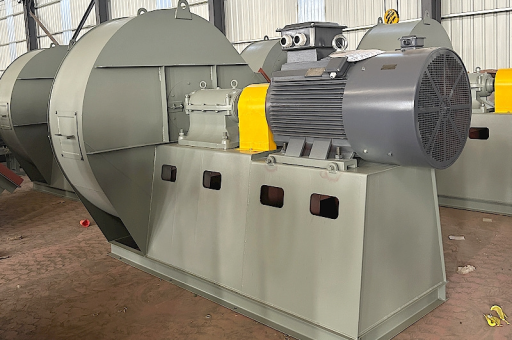
In heavy industries such as cement manufacturing, power generation, and metallurgy, the AC Motor Single Inlet Abrasion Resistant Industrial Kilns Boiler Fan is a critical piece of equipment. This fan is specifically engineered to handle high-temperature, particle-laden gas streams while maintaining reliable airflow under extreme mechanical stress. The fan is driven by an AC motor, uses a single inlet design for concentrated air intake, and is built with abrasion-resistant materials to withstand the erosive effects of fly ash, coal dust, and clinker particles.
Unlike standard industrial fans, this unit is optimized for harsh environments where dust density and temperature fluctuations are severe. Its design ensures that the fan can operate continuously at high static pressures, making it indispensable for boiler draft systems and kiln exhaust.
Core Components and Working Principle
Components:
- AC Motor (Induction Motor): Typically a 3-phase squirrel cage induction motor, designed for high torque and variable speed control via VFD (Variable Frequency Drive).
- Single Inlet Impeller: A backward-curved or radial blade impeller that draws gas from one side, maximizing efficiency and reducing turbulence.
- Abrasion-resistant lining: Made from high chrome alloy or ceramic coatings applied to the impeller blades and volute casing.
- Heavy-duty shaft and bearings: Designed to handle radial and axial loads from high-speed rotation and thermal expansion.
Working Principle:
The AC motor rotates the single inlet impeller at high speed, creating a pressure differential. The fan draws hot, dusty gas from the kiln or boiler, accelerates it through the volute, and discharges it into the ductwork. The abrasion-resistant surfaces minimize wear from particle impact, while the single inlet design simplifies installation and maintenance in space-constrained industrial layouts.
Why Abrasion Resistance is Critical in Kiln and Boiler Environments
In a cement kiln or coal-fired boiler, the gas stream contains high concentrations of abrasive particles. These particles can include:
- Silica and alumina from raw materials.
- Fly ash and unburned carbon from combustion.
- Clinker dust from cooling processes.
Without proper abrasion protection, standard fan blades would erode within weeks, causing imbalance, vibration, and catastrophic failure. Abrasion-resistant fans feature:
- High-chrome steel blades offering 3–5x longer life than carbon steel.
- Ceramic tile liners in high-wear zones.
- Hard-faced leading edges to deflect particles.
According to engineering data from fan industry reports, an abrasion-resistant fan can extend service intervals by 300% compared to a standard carbon steel fan in the same application.
Key Applications: Cement Kilns, Power Plant Boilers, and Steel Furnaces
A. Cement Kilns:
Used for induced draft (ID) in preheater towers and kiln exhaust systems. The fan must handle gas temperatures from 150°C to 400°C and dust loads up to 100 g/Nm³. The AC motor single inlet design is preferred for its compact footprint and ease of integration.
B. Power Plant Boilers:
In coal-fired power plants, these fans serve as primary air (PA), forced draft (FD), and induced draft (ID) fans. The single inlet configuration ensures high efficiency in boiler gas recirculation and scrubber systems.
C. Steel Furnaces:
Used in electric arc furnace (EAF) baghouse systems and ladle furnace exhaust. The fan must handle high temperatures and corrosive gases mixed with iron oxide particles.
Comparison: Single Inlet vs. Double Inlet Fans
| Feature | Single Inlet Fan | Double Inlet Fan |
|---|---|---|
| Airflow Capacity | Moderate to high | Very high |
| Space Requirement | Compact, single-side duct | Requires more space |
| Dust Handling | Excellent for abrasive dust | Good but more complex maintenance |
| Cost | Lower initial and maintenance cost | Higher due to dual bearings & shafts |
| Efficiency at Part Load | Better with VFD | Less efficient at low flow |
Verdict: For kilns and boilers where dust is heavy and space is limited, the single inlet design is the industry standard.
Top Maintenance Tips for Longevity and Efficiency
- Inspect Abrasion Liners Monthly: Use ultrasonic thickness gauges to measure wear on ceramic or hardfacing.
- Balance the Impeller Annually: Vibration monitoring prevents bearing failure.
- Lubricate Bearings Properly: Use high-temperature grease rated for 150°C+.
- Check VFD Settings: Ensure the AC motor runs at optimal RPM to avoid resonance.
- Clean Air Inlet Screens: Blockages increase dust loading and reduce efficiency.
A well-maintained fan from a reputable manufacturer can last 15–20 years in a kiln or boiler application.
Frequently Asked Questions (FAQ)
Q1: What is the maximum temperature an AC Motor Single Inlet Abrasion Resistant Fan can handle?
A: Standard models handle 250°C continuous; with water-cooled bearings and alloy steel, they can operate up to 450°C.
Q2: Can this fan be used for both positive and negative pressure systems?
A: Yes. The design handles both forced draft (pressurizing) and induced draft (vacuum) systems in boilers and kilns.
Q3: How do I select the right AC motor power rating?
A: Calculate the required airflow (CFM) and static pressure (inches WG). Use fan laws to determine shaft power, then add a 15% safety margin. A typical 100,000 CFM fan at 20" WG requires a 350–500 HP AC motor.
Q4: Is ceramic lining better than high-chrome steel for abrasion?
A: Yes, ceramic offers 5x the wear resistance, but it is more brittle. High-chrome steel is preferred when high impact or thermal shock is present.
Q5: What is the typical delivery time for a custom abrasion-resistant fan?
A: From specification to delivery, expect 12–16 weeks for a heavy-duty industrial fan from a specialized manufacturer.
Conclusion: How to Choose the Right Fan for Your Industrial Operation
Choosing an AC Motor Single Inlet Abrasion Resistant Industrial Kilns Boiler Fan requires careful analysis of gas composition, temperature, dust loading, and space constraints. Key factors to consider:
- Material selection: Ceramic lining for extreme abrasion; high-chrome for thermal resilience.
- Motor efficiency: Use IE3 or IE4 class AC motors with VFD for energy savings.
- Manufacturer reputation: Look for fan manufacturers with ISO 9001 certification and proven field data in cement or power industries.
By investing in the right fan design and following a robust maintenance schedule, you will achieve higher uptime, lower energy costs, and longer equipment life in your thermal processing operations.
For additional technical specifications or a quote for your specific kiln or boiler application, consult an industrial fan engineering team at a certified manufacturer of heavy-duty fans.





