
This article's table of contents introduction:
- The Core Problem Solved
- Key Engineering Specifications (The "Why")
- Example Product Description (Optimized for Marketing)
- Use Cases (Where this fan is used)
- Are you looking for:
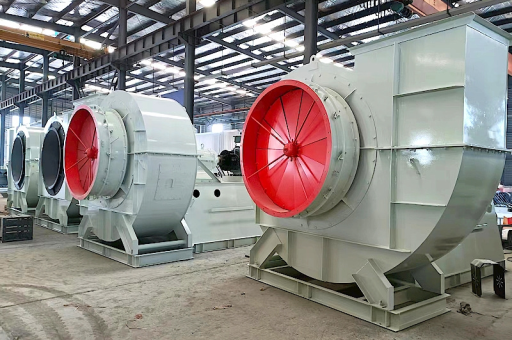
This is a highly specific product description that sounds like it belongs in a technical datasheet or a request for quotation for a power plant, cement plant, or steel mill.
To help you optimize this for actual business use (e.g., a sales pitch, a product listing, or a design brief), here is a breakdown of what makes a Boiler ID Fan (Induced Draft Fan) effective in high temperature and corrosive conditions, along with how to phrase it more powerfully.
The Core Problem Solved
A standard fan will fail in a boiler environment due to:
- Heat distortion (warping of blades).
- Creep fatigue (metal failure under constant high stress and heat).
- Corrosion (from Sulphur, Chlorine, or acidic compounds in the flue gas).
- Erosion (from fly ash particulates).
Key Engineering Specifications (The "Why")
If you are designing or sourcing this fan, here are the critical features you must specify:
Material Selection (for High Temp + Corrosion)
- Impeller: High-grade Stainless Steel (e.g., SS 316L, Duplex) or Corten/Weathering Steel (for heat resistance + corrosion). For extreme temps (over 450°C), Inconel or Hastelloy may be required.
- Casing: Often lined with Ceramic Tiles or Epoxy Liners to protect against acidic corrosion and abrasion.
Cooling System (Critical for ID Fans near Boiler)
- Shaft Cooling: Labyrinth seals with cooling air or water jacket to prevent heat transfer to bearings.
- Bearing Cooling: Thermally isolated pedestals with forced lubrication or water cooling.
Blade Design
- Backward Inclined (Airfoil) or Radial Tip: Switched to avoid material buildup and reduce erosion.
- Thickened Leading Edge: To resist fly ash erosion.
Vibration & Reliability
- High-Stiffness Shaft: To prevent bending at operating temperatures.
- Dampening Baseplates: To handle the heavy mass of the fan.
Example Product Description (Optimized for Marketing)
Option A (Technical/B2B):
"Heavy-Duty Boiler ID Fan | 350°C – 550°C Continuous Operation Our Induced Draft Fan is engineered for power boilers and industrial furnaces. Designed to handle corrosive flue gas and fly ash, it features a Hastelloy impeller, a water-cooled bearing housing, and a ceramic-lined casing. The backward-curved airfoil blades ensure high efficiency (85%+) while resisting the thermal stress and chemical attack of Sulphur compounds. Available with VFD control for precise draft regulation."
Option B (Short/Industrial):
"High-Temp Corrosion Resistant ID Fan Boiler ID fan designed for continuous duty in abrasive, high-temperature (up to 600°C) and chemically aggressive environments. Features include stainless steel construction, shaft cooling, and dynamic balancing for low vibration. Specifically tailored for coal-fired boilers, incinerators, and chemical recovery units."
Use Cases (Where this fan is used)
- Power Plants: Coal, Biomass, Waste-to-Energy.
- Cement Plants: Kiln exhaust.
- Steel Mills: Sintering, Blast Furnace exhaust.
- Chemical Plants: Combustion exhaust containing acidic vapors.
Are you looking for:
- A supplier (manufacturer of such fans)?
- A design calculation (how to size a fan for a specific boiler)?
- A troubleshooting guide (e.g., why is my ID fan vibrating/corroding)?
- A product description for a website or catalog?
Please clarify, and I can provide a precise next step (e.g., a list of top manufacturers, a calculation method for static pressure, or a material compatibility chart).





