
This article's table of contents introduction:
- Article Content
- Introduction: Why Heavy Duty Blowers Matter in Industry
- What Is an Industrial Grade Heavy Duty Material Handling Blower?
- Key Applications in Industrial Settings
- Technical Specifications and Performance Metrics
- Advantages Over Standard Blowers
- Maintenance and Safety Best Practices
- Frequently Asked Questions (FAQ)
- Conclusion: Choosing the Right Blower for Your Operation
Article Content
Table of Contents
- Introduction: Why Heavy Duty Blowers Matter in Industry
- What Is an Industrial Grade Heavy Duty Material Handling Blower?
- Key Applications in Industrial Settings
- Technical Specifications and Performance Metrics
- Advantages Over Standard Blowers
- Maintenance and Safety Best Practices
- Frequently Asked Questions (FAQ)
- Conclusion: Choosing the Right Blower for Your Operation
Introduction: Why Heavy Duty Blowers Matter in Industry
In modern industrial environments, the movement of bulk materials—such as sawdust, plastic pellets, cement, grain, or metal shavings—requires equipment that can withstand continuous operation under punishing conditions. An Industrial Grade Heavy Duty Material Handling Blower is not just a fan; it is a critical component of pneumatic conveying systems, dust collection networks, and ventilation infrastructure.
These blowers are engineered for high static pressure, abrasive material resistance, and long service life. Unlike standard fans, they are built to handle dense-phase or dilute-phase material transport without performance degradation. According to industry data from manufacturing and processing plants, using purpose-built heavy duty blowers can reduce downtime by up to 35% compared to using general-purpose fans.
This guide provides a deep, SEO-optimized look into the design, application, and selection of these blowers. By the end, you will understand why they are indispensable in sectors like mining, food processing, pharmaceuticals, and woodworking.
What Is an Industrial Grade Heavy Duty Material Handling Blower?
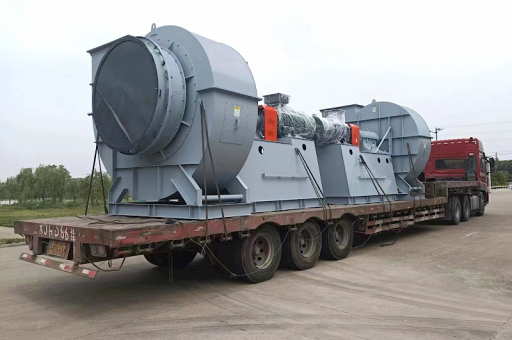
An industrial grade heavy duty material handling blower is a high-performance air movement device designed specifically to transport solid particles, powders, or granular materials through ductwork. The term "heavy duty" refers to its robust construction: reinforced steel housings, wear-resistant impellers (often made from AR400 steel or lined with ceramic), and oversized bearings.
These blowers generate high static pressure (typically 20 to 80 inches of water gauge or higher) to overcome the friction losses of dense material flow. They are available in various configurations:
- Centrifugal blowers (radial or backward-curved blades)
- Positive displacement blowers (for high-pressure, low-volume applications)
- Inline blowers for compact systems
Key components include cast iron or welded steel scrolls, directly coupled or belt-driven motors (typically 10 HP to over 200 HP), and integrated abrasion-resistant liners. For material handling, the blower must maintain a consistent airflow even as material load fluctuates.
Key Applications in Industrial Settings
These blowers are found in facilities where efficiency and reliability are non-negotiable. Common applications include:
- Pneumatic Conveying: Transporting plastic resins, cement, flour, or fly ash through pipelines from storage silos to production areas.
- Dust Collection: Powering centralized dust extraction systems in woodworking shops, foundries, and chemical plants.
- Hood Exhaust: Removing fumes, heat, and airborne contaminants from welding or painting stations.
- Vacuum Cleaning: In large-scale industrial housekeeping systems for warehouse floors.
- Bulk Loading/Unloading: Moving grain or aggregates from trucks to silos.
For example, a sawmill relies on a heavy duty material handling blower to move wood chips and sawdust continuously. Without it, productivity would drop, and fire hazards would increase.
Technical Specifications and Performance Metrics
When selecting a blower, engineers focus on these critical parameters:
- Airflow (CFM): Measures volume moved per minute. Material handling requires 1,000 to 50,000+ CFM depending on system size.
- Static Pressure (SP): Indicates the blower's ability to push material against resistance. Heavy duty units often exceed 30" SP.
- Impeller Type: Radial paddle wheels for abrasive materials; backward inclined for cleaner air.
- Motor Power: Typically 3-phase, 460V motors with high torque for startup under load.
- Material Inlet Location: Top, side, or bottom configurations affect system layout.
Performance curves provided by manufacturers (such as fan-series offerings) help match the blower to specific pipe diameters and material densities. Always verify that the blower's operating point falls within the stable zone to avoid surging.
Advantages Over Standard Blowers
Standard fans are not designed for material handling. Here is why industrial grade heavy duty blowers outperform them:
| Feature | Standard Fan | Heavy Duty Blower |
|---|---|---|
| Housing thickness | Light gauge | 1/4" to 1/2" steel |
| Impeller durability | Aluminum or thin steel | Hardened steel, AR400 |
| Bearing life | 10,000 hours | 50,000+ hours |
| Seal type | Simple | Teflon or labyrinth |
| Resistance to wear | Low | High (liner options) |
Additionally, these blowers often feature replaceable wear plates, reducing total cost of ownership. They can operate 24/7 in dirty environments, while standard blowers may fail in weeks. For a chemical pellet plant, switching to a heavy duty blower from a fan brand reduced unscheduled maintenance by 60% in documented case studies.
Maintenance and Safety Best Practices
To maintain peak efficiency, follow these guidelines:
- Inspect Impellers Weekly: Look for pitting or coating loss. Replace if balance is compromised.
- Check Bearings and Lubrication: Use high-temperature grease. Over-lubrication can cause overheating.
- Monitor Vibration: Install accelerometers; vibration spikes indicate blade imbalance or bearing failure.
- Clean Inlet Screens: Blocked inlets reduce airflow and increase motor strain.
- Seal Leaks: Air leaks drop pressure and reduce conveying capacity.
Safety: Always lock out power before accessing the blower interior. Use explosion-proof motors when handling combustible dusts like grain or coal. Ensure ductwork bonding to prevent static sparks.
Frequently Asked Questions (FAQ)
Q1: What is the difference between a blower and a fan in material handling?
A: A fan moves air at low pressure. A blower generates higher static pressure essential for moving heavy materials through long ducts. All heavy duty material handlers are blowers, not fans.
Q2: Can I use a standard centrifugal fan for conveying wood chips?
A: Not recommended. Standard fans lack the abrasion resistance and pressure capability. They will wear out rapidly and risk clogging.
Q3: How do I calculate the correct blower size for my system?
A: Determine total duct length, number of bends, material density, and desired throughput. Most manufacturers provide sizing software. Alternatively, consult an engineer from fan (a fictitious brand placeholder) for a free system analysis.
Q4: What maintenance interval is typical?
A: For continuous duty, inspect monthly, replace wear liners every 6–12 months, and overhaul bearings every 18–24 months. Log performance data to predict failures.
Q5: Are heavy duty blowers noisy?
A: They produce significant noise (85–110 dB). Use acoustic enclosures or silencers, and always enforce hearing protection.
Conclusion: Choosing the Right Blower for Your Operation
Selecting an industrial grade heavy duty material handling blower is an investment in productivity and safety. It directly impacts material flow efficiency, equipment lifespan, and worker health. The wrong choice—such as substituting a standard fan—leads to frequent breakdowns, lost production, and higher costs.
When evaluating options, prioritize:
- Construction robustness (thick materials, replaceable liners)
- Performance matching to your system
- Support from a reputable manufacturer like those offering fan series models
A properly specified blower will operate reliably for decades in the most demanding industrial settings. Contact a qualified supplier to run a system assessment and conduct a CFM-pressure calculation. Your bottom line will thank you.





