
This article's table of contents introduction:
- Understanding the Key Terms
- How to Specify a Custom Low-Noise Centrifugal Fan
- Example Spec & Manufacturer Guidance
- One Critical Warning: AMCA Certification
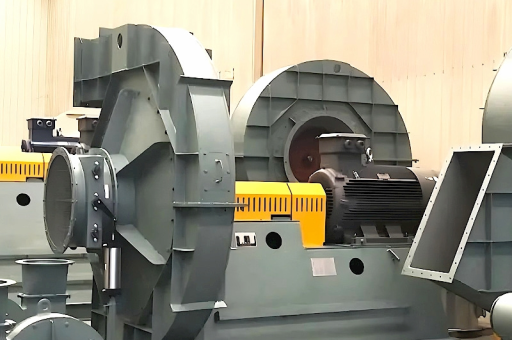
This is a technical request for a specific type of industrial fan. To provide a truly useful response, I need to break down the key terms in your query (Custom, Low Noise, Medium Pressure, Centrifugal Fan/Blower) and then offer guidance on how to specify one for industrial ventilation.
Here is a comprehensive explanation and specification guide.
Understanding the Key Terms
-
Centrifugal Fan/Blower:
- How it works: Air enters axially (along the shaft) and is expelled radially (at a 90-degree angle) by a rotating impeller.
- Why for industrial: It generates higher pressures than axial fans (like a desk fan) and is better suited for ductwork, filtration, and moving air against resistance.
-
Medium Pressure:
- Definition (General): Typically refers to static pressure ranging from 4 to 15 inches of water gauge (in. wg) or approximately 1,000 to 3,750 Pa.
- Application: This is the "sweet spot" for industrial ventilation. It's not high-pressure (like for pneumatic conveying) and not low-pressure (like for simple wall exhaust). It's perfect for systems with moderate ductwork, some bends, and standard dust collectors or filters.
-
Low Noise:
- Critical Factors: Noise in a centrifugal fan comes from three main sources:
- Aerodynamic noise: (Most significant) Caused by turbulence at the blade tips and the "slicing" of air.
- Mechanical noise: Bearings, belt drives, and motor vibration.
- Structural noise: Vibration transmitted to the mounting base and ductwork.
- Design Solutions for Low Noise:
- Backward Curved or Airfoil Impellers: These are inherently quieter than forward-curved (squirrel cage) or radial paddle wheels.
- Lower Tip Speed: Running the fan at a lower RPM reduces noise exponentially (a drop of 10% in speed can reduce noise by 2-3 dB).
- Aerodynamic Inlet Cone: A well-designed venturi at the fan inlet reduces turbulence.
- Sound Attenuators: External silencers (inlet or discharge) or acoustic enclosures.
- Vibration Isolation: Spring isolators or rubber pads under the fan base.
- Critical Factors: Noise in a centrifugal fan comes from three main sources:
-
Custom:
- Why Custom? Off-the-shelf fans often don't perfectly match the specific volume and pressure requirements. Customization ensures:
- Optimal Efficiency: The fan is designed for your exact duty point.
- Specific Space Constraints: Custom inlet/outlet flanges, motor position, and footprint.
- Material Compatibility: For corrosive, high-temperature, or abrasive environments (e.g., stainless steel, aluminum, or coated steel).
- ATEX Certification: For explosive environments (chemical plants, grain handling).
- Why Custom? Off-the-shelf fans often don't perfectly match the specific volume and pressure requirements. Customization ensures:
How to Specify a Custom Low-Noise Centrifugal Fan
To get a proper quote from a manufacturer, you need to provide the following information:
Performance Requirements (The "Duty Point")
- Airflow (CFM or m³/hr): The total volume of air you need to move.
- Static Pressure (in. wg or Pa): The resistance the fan must overcome.
- Air Density (lb/ft³ or kg/m³): Standard air (68°F, 29.92 in Hg) is 0.075 lb/ft³. High temperature or altitude reduces density and changes the fan's performance.
Noise Specification (The "Target")
- Sound Pressure Level (dBA): Desired noise level at a specific distance (e.g., 75 dBA at 3 ft).
- Sound Power Level (dB): The total acoustic energy emitted by the fan (better for accurate design).
- Octave Band Analysis: (Optional) If you have a specific frequency limit, provide the desired max dB in each octave band.
Environmental & Application Conditions
- Temperature (°F or °C): Affects material selection and motor sizing.
- Airstream Composition: Clean air, dusty, corrosive (acid/alkali), explosive (ATEX zone), or high humidity.
- Altitude (ft or m): Affects air density.
Mechanical Configuration
- Arrangement (AR): Common arrangements for medium pressure:
- AR 4: Motor direct-mounted on the fan housing. Good for low noise (no belt).
- AR 1: Motor on base, belt-driven to fan. Allows for speed changes.
- AR 9 or 10: Motor on base, belt-driven, but outside the airstream. Best for hot or corrosive air.
- Wheel Type:
- Backward Inclined (BI) or Backward Curved (BC): The standard for low-noise, medium-pressure.
- Airfoil (AF): Even quieter and more efficient (10-15% better), but more expensive and less tolerant of dust.
- Housing: Scroll type, with a cut-off optimized for low noise.
- Discharge Position: Up-blast, down-blast, horizontal, angled.
- Inlet Position: Single inlet (SWSI) or double inlet (DWDI).
Noise Reduction Add-ons (For "Custom Low-Noise")
- Inlet Silencer / Cone: A bell-mouth inlet diffuser with acoustic treatment.
- Discharge Silencer: A rectangular or cylindrical duct section with baffles.
- Acoustic Enclosure: A box that fully encloses the fan, motor, and drive. Requires cooling for the motor.
- Flexible Connectors: At the inlet and outlet to prevent vibration transmission to ducts.
Example Spec & Manufacturer Guidance
Example Customer Request (Best Practice):
"I need a custom low-noise centrifugal blower. Duty point: 5,000 CFM at 8 in. wg static pressure. Air is clean air at 80°F. Noise target: 78 dBA at 5 feet. I need a backward-inclined wheel, direct-drive (Arr 4), with a plain steel housing and a stainless steel impeller. I also need an inlet silencer and spring isolators."
Recommended Manufacturers for Custom Low-Noise Centrifugal Fans:
| Manufacturer | Speciality | Contact Note |
|---|---|---|
| New York Blower (NYB) | High-quality, highly custom industrial fans. Excellent for low-noise and critical applications. | Request their "Q-Fan" or "L-Series" with low-noise options. |
| Greenheck | Good for general industrial ventilation. Offer "Sonic" low-noise fans and silencers. | Look at their "Vektor" or "BIDW" series with acoustic treatment. |
| Chicago Blower | Strong in custom heavy-duty fans. Good for medium pressure. | Ask for a "LNN" (Low Noise) or "PLN" series. |
| Cincinnati Fan | Good for standard and medium-pressure custom builds. | They specialize in Backward Inclined (BI) and Airfoil (AF) wheels. |
| Navitech (Industrial) | For more budget-friendly custom Chinese or Taiwanese OEM options. | Ensure they provide AMCA (Air Movement and Control Association) certified performance data. |
One Critical Warning: AMCA Certification
When you request a custom low-noise fan, always ask if the manufacturer can provide AMCA 300 certified sound data and AMCA 210 certified performance data.
- Without this, the performance and noise numbers they give you are likely "computer projections" – they may not be accurate.
- With it, you have a guarantee that the fan will actually meet your airflow, pressure, and noise requirements.
In summary: For your industrial ventilation needs, specify a Backward Inclined (BI) or Airfoil (AF) wheel fan with a direct-drive motor, an acoustic inlet cone, and vibration isolators. Provide your exact CFM and static pressure. This combination will give you the lowest noise for a custom, medium-pressure centrifugal blower.





