
This article's table of contents introduction:
- What is a Carbon High Pressure Blower for Metallurgy?
- Applications in the Metallurgy Industry
- Design Features & Specifications
- Advantages of Carbon Steel (vs. Stainless Steel)
- Leading Manufacturers (Typical in the Industry)
- Selection Considerations
- Summary Table for a Typical "Carbon High Pressure Blower, Metallurgy"
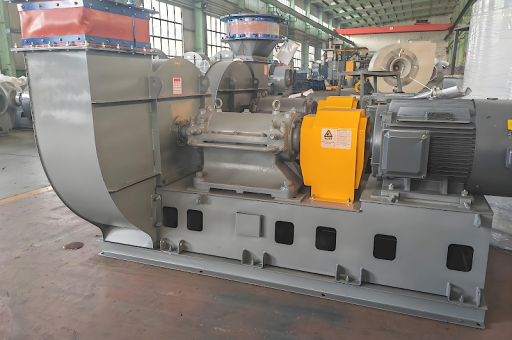
It appears you are looking for a specific type of industrial fan: a Carbon High Pressure Blower designed for use in the Metallurgy industry.
This is a highly specialized piece of equipment. In metallurgy, "Carbon" can refer to two distinct things regarding the fan:
- The Material of Construction (Carbon Steel): The fan is made from carbon steel (as opposed to stainless steel or other alloys).
- The Application (Carbon / Coke Handling): The fan is used to move air/gases related to carbon, coal, or coke processing (e.g., in steel mills or smelters).
I will provide a detailed response covering both interpretations, as a standard "Carbon High Pressure Blower" in metallurgy typically implies a rugged, Carbon Steel fan designed for high pressure and harsh environments.
Here is a comprehensive breakdown of this type of fan.
What is a Carbon High Pressure Blower for Metallurgy?
This is a centrifugal fan (blower) specifically engineered to generate high static pressure (typically > 2000 Pa or > 8 inches w.g.) to overcome the resistance of complex duct systems, filters, and furnaces in metal processing.
Key Characteristics:
- High Pressure: Designed to move large volumes of air against significant resistance (e.g., for forced draft, induced draft, or pneumatic conveying).
- Carbon Steel Construction: Typically made from Q235 or Q345 carbon steel plate (or equivalent like ASTM A36).
- Why Carbon? It is strong, affordable, weldable, and suitable for non-corrosive or dry gases at moderate temperatures. For higher temperatures, special alloy or stainless steel is used.
- Heavy-Duty: Built to withstand continuous operation (24/7), vibration, and thermal stress.
- Efficiency: Often features backward-curved or airfoil blades for high efficiency and non-overloading power characteristics.
Applications in the Metallurgy Industry
These blowers are critical for various processes:
- Combustion Air (Forced Draft - FD): Supplying high-pressure air into blast furnaces, cupolas, reheating furnaces, and soaking pits to ensure efficient fuel combustion.
- Flue Gas Removal (Induced Draft - ID): Extracting high-temperature, dusty flue gases from furnaces and scrubbers (often requiring a water-cooled bearing housing or high-temperature seal).
- Pneumatic Conveying: Transporting bulk materials like coal dust, coke breeze, ore fines, or metal powders through pipelines.
- Dust Collection: Powering baghouse filters or cyclone separators to capture particulate matter from smelting, grinding, or sintering operations.
- Cooling: Forced cooling of hot metal, slag, or equipment (e.g., electric arc furnace transformers).
- Gas Recirculation: Moving high-pressure blast furnace gas or converter gas for energy recovery or process control.
Design Features & Specifications
When sourcing or specifying this fan, look for these standard features:
| Feature | Description |
|---|---|
| Type | Centrifugal, Single or Double Inlet. |
| Impeller | Backward-curved blades, flat radial blades, or airfoil blades. High-strength welded steel. |
| Housing | Heavy-gauge carbon steel (Q235/Q345), spiral volute design for efficient air collection. |
| Shaft | High-strength carbon steel (45#) or alloy steel, precisely machined. |
| Bearings | Heavy-duty roller or ball bearings (SKF, NSK, or Japanese/Korean brands), grease-lubricated with temperature monitoring ports. |
| Drive | Direct drive (coupling) or V-belt drive. Belt drive allows speed adjustment to match system pressure/flow. |
| Seals | Labyrinth seals or carbon ring seals to prevent gas leakage (important for toxic or hot gases). |
| Stand/Base | Heavy-duty steel frame with vibration isolators (spring or rubber). |
| Accessories | Inlet/outlet expansion joints, damper controls (inlet guide vanes or outlet louver), silencers, vibration sensors. |
Advantages of Carbon Steel (vs. Stainless Steel)
| Aspect | Carbon Steel | Stainless Steel |
|---|---|---|
| Cost | Significantly lower. | 3-5x higher. |
| Strength | Very high (Q345 is stronger than 304L). | Good, but lower yield strength. |
| Corrosion Resistance | Poor (rusts easily). Must be painted. | Excellent. |
| Temperature | Good up to ~400°C (750°F) with proper design. | Good up to ~600°C (1110°F). |
| Abrasion Resistance | Good (can be hard-faced or lined). | Moderate. |
| Application | Dry, clean/hot gases. | Wet, acidic, or corrosive gases. |
Recommendation: For most dry metallurgical processes (blast furnace air, combustion air, conveying of abrasives), Carbon Steel is the standard and most cost-effective choice.
Leading Manufacturers (Typical in the Industry)
- China: Shanghai Sipai, Yantai Sunny, Xinxiang Zhongda, Shandong Tianren.
- International: Howden, TLT-Turbo, Greenheck, New York Blower, Robinson Fans, ABC Fans.
Selection Considerations
Before purchasing, provide these specifications to the manufacturer:
- Airflow (m³/hr or CFM)
- Static Pressure (Pa or inches w.g.)
- Gas Temperature (°C or °F) - Critical for material and bearing cooling design.
- Gas Composition - Is it clean air, dusty, explosive, or toxic?
- Altitude - Affects air density.
- Motor Requirements - Voltage, frequency, enclosure (e.g., TEFC, explosion-proof).
- Installation Environment - Indoor/outdoor, ambient temperature.
Summary Table for a Typical "Carbon High Pressure Blower, Metallurgy"
| Attribute | Detail |
|---|---|
| Model Example | Sipai C6-48 or Sipai 9-19 (High Pressure series) |
| Material | Q345 Carbon Steel (Impeller & Housing) |
| Pressure | 2,500 - 15,000 Pa (0.36 - 2.17 psi) |
| Power Range | 2 kW - 315 kW (3 HP - 420 HP) |
| Temperature Range | -20°C to 250°C (standard); up to 400°C with special seals |
| Key Feature | High-pressure, backward-curved blades for stability and efficiency |
| Typical Use | Blast furnace forced draft; pneumatic coal injection; dust hopper evacuation |
Final Verdict: A Carbon High Pressure Blower is the ideal workhorse for dry, high-pressure metallurgical applications where cost-effectiveness and robustness are paramount. You will almost certainly want to specify Q345 (16Mn) steel for the impeller if the gas is abrasive or hot, as it offers superior toughness compared to standard Q235.
Need a specific quote or model? You would need to contact an industrial fan manufacturer with your specific operating data (flow, pressure, temperature, gas type). If you provide those numbers, I can help you interpret the selection.





