
This article's table of contents introduction:
- Table of Contents
- Introduction: The Critical Role of Forced Draft in Steel Production
- Material & Build Quality: Why Q235 Steel is the Industry Standard
- Ingress Protection: Decoding the IP55 Rating for Harsh Environments
- Air Flow Dynamics: Achieving "High Air Flow" in Boiler Systems
- Class Integration: Matching Fan Classification with Steel Plant Demands
- Application Focus: Forced Draft vs. Induced Draft in Steel Boilers
- Q&A: Common Challenges and Solutions for Steel Plant Operators
- Conclusion: Selecting the Right Fan for Long-Term ROI
*Maximizing Efficiency: The Q235 IP55 Class High Air Flow Industrial Boiler Forced Draft Fan for Steel Plants*
Table of Contents
- Introduction: The Critical Role of Forced Draft in Steel Production
- Material & Build Quality: Why Q235 Steel is the Industry Standard
- Ingress Protection: Decoding the IP55 Rating for Harsh Environments
- Air Flow Dynamics: Achieving "High Air Flow" in Boiler Systems
- Class Integration: Matching Fan Classification with Steel Plant Demands
- Application Focus: Forced Draft vs. Induced Draft in Steel Boilers
- Q&A: Common Challenges and Solutions for Steel Plant Operators
- Conclusion: Selecting the Right Fan for Long-Term ROI
Introduction: The Critical Role of Forced Draft in Steel Production
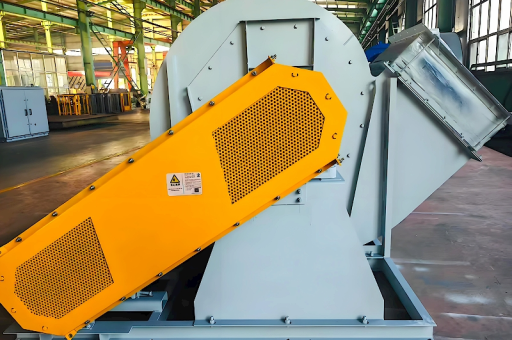
In a modern steel plant, the boiler is the heart of the energy system. It provides high-pressure steam for power generation, process heating, and coke oven operations. But a boiler is only as effective as its air management system. The Q235 IP55 Class High Air Flow Industrial Boiler Forced Draft unit—typically a fan—ensures that combustion receives a precise, continuous supply of oxygen. Without this forced draft, fuel burns inefficiently, leading to slagging, higher emissions, and lower steel yield.
This article dissects the technical specifications of this fan system, explaining why Q235 steel, IP55 protection, and high air flow capacity are non-negotiable for steel plant environments.
Material & Build Quality: Why Q235 Steel is the Industry Standard
Q235 is a Chinese standard carbon structural steel (equivalent to ASTM A36 or S235JR). It offers a yield strength of 235 MPa. For an industrial boiler forced draft fan, Q235 provides:
- Weldability: Facilitates fabrication of complex impeller and housing geometries.
- Impact Resistance: Withstands vibration from large motors and duct pressure fluctuations.
- Cost-Effectiveness: Lower material cost than stainless steel, yet sufficient for non-corrosive air streams in a coal or gas boiler.
Warning: Q235 is not suitable for corrosive flue gas (e.g., sulfur-rich environments). For forced draft (pushing fresh air), it is ideal.
Ingress Protection: Decoding the IP55 Rating for Harsh Environments
IP55 means the fan is:
- 5: Dust-protected (limited ingress, no harmful deposit).
- 5: Protected against low-pressure water jets from any direction.
Why this matters in a steel plant:
- Coke dust & iron oxide fines: These particles can short-circuit unprotected motors. IP55 prevents dust accumulation inside the motor housing.
- Wash-down cycles: Steel mills often hose down equipment. IP55 ensures water jets (e.g., from cleaning) do not damage windings.
- High ambient temperature: IP55-rated fans typically include sealed bearings and insulated winding wire rated for 180°C (Class H or F).
Air Flow Dynamics: Achieving "High Air Flow" in Boiler Systems
"High Air Flow" in this context typically exceeds 50,000 m³/h per unit. Key engineering factors:
- Impeller Design: Backward-curved blades reduce turbulence and noise while delivering steady static pressure (e.g., 2,000–4,000 Pa).
- Speed & Motor Pairing: A direct-drive 4-pole motor (1,450–1,750 RPM) with variable frequency drive (VFD) allows flow modulation to match boiler load.
- Inlet Box & Damper: Integrated inlet vanes or a siphon ring pre-swirl air to reduce motor start-up current.
Performance Metric: A well-designed forced draft fan maintains a turndown ratio of 5:1, meaning it can operate at 20% to 100% capacity without surging.
Class Integration: Matching Fan Classification with Steel Plant Demands
The "Class" in the title likely refers to fan classification per ISO 13349 or DIN 24163 (e.g., Class I, II, III). For a steel plant boiler:
- Class III or higher is recommended. This denotes:
- Higher tip speed (up to 100 m/s).
- Reinforced housing to withstand pressure spikes from duct blockages.
- Oversized shafts with dual bearing support (sometimes water-cooled).
Example: A Class III forced draft fan can handle temporary backpressure from a baghouse filter cleaning cycle without blade fatigue.
Application Focus: Forced Draft vs. Induced Draft in Steel Boilers
| Parameter | Forced Draft (FD) | Induced Draft (ID) |
|---|---|---|
| Air Source | Fresh ambient air | Hot flue gas (250–350°C) |
| Fan Material | Q235 (standard) | High-alloy steel or ceramic coating |
| Pressure | Positive (+2–5 kPa) | Negative (-2–4 kPa) |
| Typical Challenge | Vibration, dust ingress | Thermal expansion, corrosion |
Key Insight: In a steel plant, the Q235 IP55 High Air Flow Forced Draft is always on the cold side of the boiler. It pulls clean air from the atmosphere and pushes it through the air preheater and burner. This keeps the fan safe from heat and acid dew point corrosion.
Q&A: Common Challenges and Solutions for Steel Plant Operators
Q1: My forced draft fan vibrates heavily during startup. Why? A: This is often caused by unbalanced impeller due to dust accumulation or worn bearings on the Q235 housing mount first. Solution: Install a vibration sensor (4–20 mA) and perform dynamic balancing every 6 months. Also check for cavitation at the inlet bell.
Q2: The IP55 motor keeps tripping in summer. Is the rating wrong? A: IP55 protects against dust and water, but not against ambient heat. If the steel plant ambient temperature exceeds 55°C (131°F), the motor must be derated. Solution: Add a forced air cooling shroud to the motor exterior or switch to a TEFC (Totally Enclosed Fan Cooled) motor with IP55. Also verify the motor winding insulation class (should be Class H for 180°C).
Q3: Can I use a Q235 fan for a blast furnace gas boiler? A: No. Blast furnace gas contains CO and fine particulates. Even for forced draft (air side), the fan must be gas-tight with a shaft seal. Use a stainless steel housing and a carbon ring seal to prevent gas leakage. Q235 is only safe for clean air in pulverized coal or natural gas boilers.
Q4: How do I calculate the required air flow for my boiler?
A: Use the formula:
Air Flow (m³/h) = (Fuel Consumption kg/h × Stoichiometric Air Ratio × 1.15 Safety Factor) ÷ 1.2 kg/m³
Example: For 10 tons/h of coal with a ratio of 7.5 Nm³/kg, you need ≈ 62,500 m³/h at 20°C. Always add 15% for turndown.
Conclusion: Selecting the Right Fan for Long-Term ROI
The Q235 IP55 Class High Air Flow Industrial Boiler Forced Draft is a proven solution for steel plants that prioritize cost efficiency and reliability. However, success depends on:
- Correct class selection (Class III or above for continuous duty).
- Proper sizing with a VFD for load following.
- Routine maintenance of the IP55 seal (replace gaskets annually).
For new installations, request a performance curve from the fan manufacturer at fan domain to confirm the fan can deliver your design pressure across the entire flow range. Remember: A forced draft fan is not a commodity; it is a custom-engineered asset that directly impacts your boiler’s thermal efficiency and emission compliance.
Written for steel plant engineers and procurement managers seeking long-term operational excellence.





