
This article's table of contents introduction:
- Breaking Down the Specification
- Typical Application in a Chemical Plant
- What to Look for in a Fan for Your Application
- Potential Manufacturers (specifically for Chemical Plants)
- Critical Considerations Before Buying
- Summary of what you are buying:
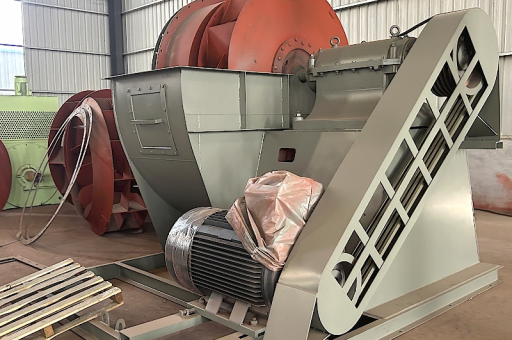
This is a highly specific piece of industrial equipment. To give you the most accurate information, I will break down what that description means, the typical specifications, and where you would source this for a chemical plant.
Breaking Down the Specification
- Single Inlet: This means the fan has one air intake (suction side). This is standard for ducted systems where air is pulled from a single point (e.g., a scrubber, a reactor vent, or a dryer).
- Stainless Steel (SS): Crucial for chemical plants. You need SS304 or SS316/SS316L.
- SS304: Good for general corrosive fumes, moisture, and moderate acids.
- SS316/L: Required for chloride-laden environments (e.g., bleach, hydrochloric acid vapors, coastal plants). This is the standard for chemical service.
- IP55: Ingress Protection rating.
- 5: Dust-protected (some dust ingress is allowed but won’t harm operation).
- 5: Protected against water jets (low-pressure jets from any direction).
- Implication: The motor and electricals are weatherproof and wash-down safe but not submersible. This is a minimum for outdoor chemical plants.
- Class: This likely refers to Fan Classification (e.g., Class I, II, III, IV) per standards like AMCA 99.
- Class I: Lower pressure (up to ~6 in. w.g.)
- Class II: Medium pressure (up to ~12 in. w.g.)
- Class III/IV: High pressure (up to ~24+ in. w.g.)
- Context: "High Volume Induced Draft" usually implies Class II or III.
- Induced Draft (ID): The fan is located after the process (on the exhaust side). It pulls air/fumes through the system (scrubber, ductwork, heat exchanger) and discharges it to the stack. This creates negative pressure in the system, preventing leaks of hazardous fumes out of the ductwork.
- High Volume: Implies a high airflow rate (CFM or m³/hr) relative to the pressure. Typically, you are moving large volumes of gas against a relatively low to moderate static pressure (e.g., 10,000 CFM @ 8" w.g.).
Typical Application in a Chemical Plant
This fan is designed for corrosive exhaust handling. You would see it in:
- Fume Scrubber Exhaust: Pulling cleaned, but still humid and acidic, air out of a vertical wet scrubber.
- Tank Farm Ventilation: Removing flammable or toxic vapors from storage tank vent lines.
- Reactor Exhaust: Induced draft for reactors requiring negative pressure.
- Dryer Exhaust: Removing hot, humid, and possibly corrosive air from drying ovens.
- General Fume Extraction: Removing heavy fumes from a large open bay or pit.
What to Look for in a Fan for Your Application
| Feature | Requirement for Chemical Plant | Why? |
|---|---|---|
| Material | SS316L (AISI 316L) | Low carbon prevents carbide precipitation during welding; best for chlorides and acids. |
| Wheel Type | Backward Curved (BC) or Airfoil (AF) | BC is non-overloading, stable, and efficient. AF is more efficient but less robust for sticky fumes. Radial tip is best for dirty, sticky, or high-particulate fumes. |
| Motor | TEFC (Totally Enclosed Fan Cooled), Premium Efficient (IE3 or IE4), Inverter Duty | Must be IP55. Inverter duty allows for VFD control for variable flow. |
| Shaft Seal | Labyrinth seal or carbon ring seal | Prevents fumes from traveling along the shaft to the motor bearings. |
| Bearings | Oversized, heavy-duty pillow blocks with grease relief | Chemical plants run 24/7. Bearings must handle high belt load and heat. |
| Drain | Bottom drain with plug | Condensation of corrosive fumes can pool inside the fan housing. Must be drained. |
| Access Door | Hinged access door on the side | For inspection and cleaning of the wheel without disconnecting ductwork. |
| Base/Frame | Carbon steel with heavy-duty epoxy paint, OR stainless steel | The fan base often corrodes first. A galvanized or painted carbon steel base is standard, but SS is better. |
| Drive | Belt drive preferred (or direct drive)** | Belt drive allows easy adjustment of RPM to change airflow. Direct drive is more efficient but less flexible. Belt drive is standard for high volume ID fans. |
Potential Manufacturers (specifically for Chemical Plants)
You cannot buy a "generic" fan for this. You need a Chemical Process Fan manufacturer.
- North America:
- New York Blower (NYB): Industry leader for corrosive service. Look at their "LS" or "RTS" lines.
- Robinson Fans: Excellent for heavy-duty, high-temp, and corrosive environments.
- Howden / Clarage: Large industrial fans for power and chemical.
- Greenheck: Their "Cubic" or "Vektor" lines are used, but for custom chemical, NYB/Robinson are better.
- Europe/Asia:
- FLAKTGroup / Woods: Very common in European chemical plants.
- Punker GmbH: German high-quality stainless fans.
- Cincinnati Fan: Good value for standard industrial fans.
Critical Considerations Before Buying
- Static Pressure (SP): Crucial. Is the fan pulling through a highly restrictive scrubber (high SP) or just open ductwork (low SP)? You need the exact SP at the design CFM.
- Temperature: Is the gas at ambient (20°C / 70°F) or hot (100°C / 210°F)? High temperature requires different shaft seals and limits motor placement.
- Gas Composition:
- Wet, Acidic (H2SO4, HCl): Requires SS316L.
- Dry, Non-Corrosive: Could use a painted steel fan with SS wheel.
- Explosive (VOCs, H2): Requires ATEX (Europe) or UL/CSA Class I Div 1 or 2 (USA) spark-resistant construction (non-ferrous wheel, shaft grounding).
- VFD Compatibility: "High Volume Induced Draft" often implies the system needs variable speed to handle varying process loads. Your fan motor MUST be inverter-rated.
Summary of what you are buying:
You are specifying a Custom Chemical Process Fan, not a standard ventilation fan. Expect a 4–12 week lead time.
Your final specification line would look like this:
"Provide a Single Inlet, Belt Driven, Induced Draft Fan. Fan housing and wheel to be AISI 316L Stainless Steel. Motor to be TEFC, IP55, Inverter Duty, IE3 Premium Efficient. Fan to be AMCA Class II construction. Provide shaft seal, bottom drain, and access door. Fan to be rated for [Your CFM] at [Your Static Pressure in inches w.g.] of air at [Your Temperature]. Fan to be suitable for Corrosive Chemical Service."
Recommendation: Do not buy this fan on price alone from a generic supplier. Contact a rep from New York Blower or Robinson Fans and let them size it for your specific chemical process. A failure in a corrosive ID fan can shut down your entire plant.





