
This article's table of contents introduction:
- Core Characteristics
- Typical Components
- Advantages over Standard Fans
- Typical Applications
- How to Choose One (Key Specifications)
- Conclusion
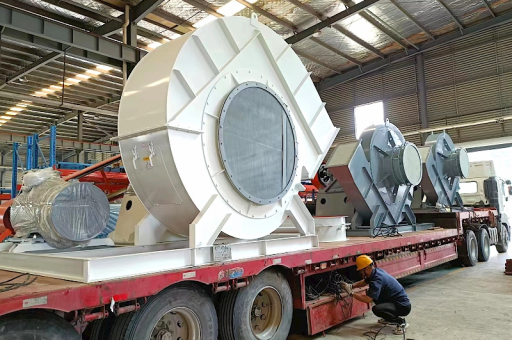
This is a highly specific piece of industrial equipment. A Heavy Duty Double Inlet Efficient Energy Saving Industrial Centrifugal Ventilation Fan is a specialized air-moving device used in large-scale facilities.
Here is a detailed breakdown of its features, components, and typical applications.
Core Characteristics
-
Double Inlet (Double Suction):
- Unlike a standard fan that pulls air from one side, this fan pulls air from both sides of the impeller (the rotating wheel).
- Benefit: This roughly doubles the airflow capacity for the same diameter impeller, making it ideal for high-volume applications. It also balances the axial thrust on the motor bearings, increasing reliability.
-
Heavy Duty:
- This implies the fan is built for continuous, 24/7 operation in demanding environments. Key features include:
- Robust Casing: Made from thick gauge steel or stainless steel (for corrosive environments).
- Reinforced Bearings: Often pillow block bearings designed for heavy radial and thrust loads.
- Sturdy Impeller: A non-overloading, backward-curved or airfoil blade design made from heavy steel plate. This design prevents the motor from overheating if the system pressure suddenly drops.
- High-Performance Motor: Typically a high-efficiency (IE3/IE4/NEMA Premium) motor rated for continuous duty.
- This implies the fan is built for continuous, 24/7 operation in demanding environments. Key features include:
-
Energy Saving (Efficient):
- The "Energy Saving" label usually refers to aerodynamic efficiency and motor efficiency.
- Aerodynamic: Backward-curved or airfoil blades are inherently more efficient than forward-curved (squirrel cage) blades. They have lower internal losses and can operate at higher static pressures with less energy consumption.
- Motor: The fan is almost always paired with a Variable Frequency Drive (VFD) . A VFD allows the fan speed to be precisely matched to the actual demand for ventilation, leading to massive energy savings compared to using dampers or inlet vanes to control airflow.
- Standards: Likely meets or exceeds performance standards like AMCA 210 (for air performance) and ISO 5801.
-
Industrial Centrifugal Ventilation:
- Centrifugal: The air enters axially (straight into the inlet) and exits radially (at a 90-degree angle). This generates higher pressures than axial fans (like a box fan or wall fan).
- Ventilation: The primary purpose is general air supply, exhaust, or air circulation in large spaces (not material handling, which requires different blade shapes).
Typical Components
- Impeller: Backward-curved or airfoil blades.
- Casing: Spiral (volute) housing with dual inlets on the sides.
- Drive System: Direct drive (motor directly coupled to shaft) or belt drive (allows for speed changes via pulley adjustments). Direct drive is more common for efficient VFD applications.
- Bearings: Heavy-duty, self-aligning, grease-lubricated or oil-lubricated.
- Base/Frame: Heavy-duty steel I-beam or channel frame for rigid mounting.
- Inlet Cone: Streamlined cone on each side to guide air smoothly into the impeller eye, reducing turbulence and noise.
Advantages over Standard Fans
| Feature | Standard Single-Inlet Fan | Heavy Duty Double-Inlet Fan |
|---|---|---|
| Airflow Capacity | Limited by single inlet | Much higher for same diameter |
| Efficiency (Peak) | 60-75% | 75-85%+ (with airfoil blades) |
| Durability | Standard duty | Continuous, extreme duty |
| Energy Costs | Higher (without VFD) | Lower (especially with VFD) |
| Noise Level | Moderate | Lower (due to smoother airflow) |
| Price | Lower | Higher (but better ROI) |
Typical Applications
These fans are the backbone of large-scale industrial ventilation systems. Common uses include:
- Large Manufacturing Plants: General air exchange, cooling of machinery and personnel.
- Wastewater Treatment Plants: Aeration, digester gas handling, building ventilation.
- Commercial HVAC (Large Buildings): Air handling units (AHUs) in airports, convention centers, shopping malls.
- Power Plants: Boiler room ventilation, cooling tower applications.
- Mining & Tunnels: Primary ventilation, dust control.
- Data Centers: Cooling of server rooms (used in large air handling units).
How to Choose One (Key Specifications)
To specify or purchase the correct fan, you need:
- Airflow (CFM or m³/h): The total volume of air required.
- Static Pressure (in. wg or Pa): The resistance the fan must overcome (ductwork, filters, dampers).
- Air Density (lbs/ft³ or kg/m³): Affected by temperature and altitude. A fan in a hot environment moves less mass air per revolution.
- Temperature: Maximum operating temperature determines materials and bearing lubrication.
- Environment: Is the air clean? Corrosive? Explosive? (Determines materials like stainless steel, aluminum, or special coatings).
- Drive Type: Direct drive (for VFD use) or belt drive (for fixed speed or simple speed changes).
- Mounting: Floor-mounted, roof-mounted, or suspended.
Conclusion
The Heavy Duty Double Inlet Efficient Energy Saving Industrial Centrifugal Ventilation Fan is a top-tier solution for moving very large volumes of air at moderate to high pressures in demanding industrial settings. Its primary benefits are high efficiency, reliability, and significant long-term energy cost savings, particularly when paired with a VFD.





