
This article's table of contents introduction:
- The Core Problem: Coking Unit Odors & Leakage
- The Solution: "Zero Leakage Sealed Fan Blower"
- Key Customization Features for "Coking Unit Storage Tank Odor Treatment"
- Technical Specification Summary (Example)
- Top Manufacturers for This Application
- Critical Recommendation for Procurement
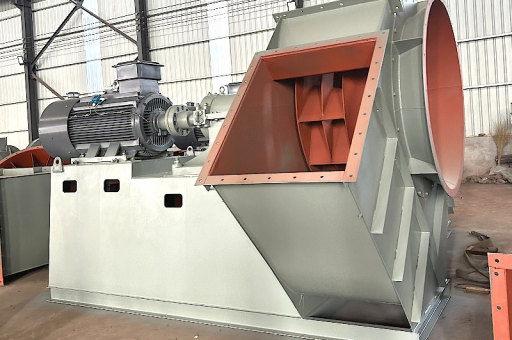
It appears you are looking for a specific industrial solution: a customized, zero-leakage sealed fan blower system used as supporting equipment for odor treatment in the storage tanks of a Petrochemical Coking Unit.
This is a highly specialized piece of equipment designed to handle Volatile Organic Compounds (VOCs) and malodorous gases (like H₂S and mercaptans) while preventing any fugitive emissions.
Here is a detailed breakdown of what this system entails, its key features, and why it is critical for your application.
The Core Problem: Coking Unit Odors & Leakage
- The Source: In a Coking Unit, storage tanks hold raw coker naphtha, light coker gas oil (LCGO), and heavy coker gas oil (HCGO). These streams are high in reactive olefins, sulfur compounds (H₂S), and nitrogen compounds, which create intense, hazardous odors.
- The Challenge: Traditional centrifugal fans used for tank vapor recovery or thermal oxidizer feed often leak through shaft seals. Any leakage is dangerous, violates environmental regulations (e.g., EPA, local emission caps), and causes a nuisance to the plant and surrounding community.
The Solution: "Zero Leakage Sealed Fan Blower"
The term "zero leakage" is paramount. This is typically achieved through one of two technologies, chosen based on the specific gas composition and pressure requirements:
Option A: Magnetically Coupled (Mag-Drive) Sealless Blowers (Best for high toxicity)
- How it works: The motor torque is transferred to the impeller through magnetic attraction across a solid containment shell (can). There is no dynamic shaft seal.
- Advantages:
- True Zero Leakage: Eliminates the single biggest failure point (the shaft seal).
- Low Maintenance: No seals to adjust or replace.
- Safety: Ideal for explosive or highly toxic (H₂S) atmospheres.
- Consideration: Requires careful material selection (wetted parts) to prevent corrosion from wet H₂S and coker acids.
Option B: Double Mechanical Seal with Buffer Fluid System (API 682 Type A or C)
- How it works: Two mechanical seals face each other. A clean, compatible buffer fluid (e.g., nitrogen or clean oil) is pressurized between them at a higher pressure than the process gas.
- Advantages:
- Reliability: A well-established technology for high-flow applications.
- Fail-Safe: If a seal fails, the buffer fluid leaks into the process (safe) or atmosphere (contained), preventing gas leakage.
- Consideration: Requires a support system (buffer fluid reservoir, pressure regulation, monitoring) which adds complexity.
Key Customization Features for "Coking Unit Storage Tank Odor Treatment"
For your specific application, the fan must be customized for:
-
Material Selection (Corrosion Resistance):
- Impeller & Housing: Must be 316L Stainless Steel or Duplex Stainless Steel (e.g., S31803/S32205) to resist "sour gas" corrosion (H₂S + moisture + naphthenic acids).
- Coating: Internal epoxy or phenolic coating may be needed to prevent sticking of polymerized olefinic gums.
-
Low NPSH Requirement:
Tank vapor spaces operate near atmospheric pressure. The blower must be designed to maintain a high suction vacuum (to pull vapors) without cavitating.
-
Variable Speed Drive (VSD):
- A VSD motor is standard. It allows the fan to precisely match the tank's "breathing" rate (filling/emptying) and maintain a slight vacuum on the tank to prevent vapor escape.
- This is critical for "Vapor Balancing" between the coking unit's fractionator and the storage tank.
-
Explosion-Proof (ATEX/IECEx/Class I Div 1):
The motor and all electrical components must be rated for Coker Unit vapors (typically Zone 1, Group IIA or IIB, Temperature Class T3/T4).
-
Integrated Odor Treatment Support:
- The blower is typically the "engine" that delivers the vapors to:
- A Thermal Oxidizer (TO) or Flare: For destruction.
- A Carbon Adsorption Bed: For polishing.
- A Biotrickling Filter: For biological odor removal.
- The Zero Leakage design ensures no "short-circuiting" of untreated gas between the tank and the treatment unit.
- The blower is typically the "engine" that delivers the vapors to:
Technical Specification Summary (Example)
| Parameter | Specification for Coking Unit Fan |
|---|---|
| Type | Centrifugal, Sealless (Mag-Drive) or Double Sealed |
| Max Leakage | 0 ppm / Zero visible emission |
| Flow Rate | 500 – 5,000 CFM (custom to tank size) |
| Differential Pressure | 5 – 20 PSI (to overcome ductwork + treatment unit backpressure) |
| Material | 316L SS / Duplex SS (Housing, Impeller) |
| Seal Type | Mag-Drive (Containment Shell) or API 682 Dual Seal |
| Motor | VFD Rated, Explosion-Proof (Class I, Div 1, Group D) |
| Accessories | Inlet Filter/Silencer, Check Valve, Discharge Rupture Disc, Vapor Recovery Regulator (for N₂ purge to tanks) |
Top Manufacturers for This Application
You should contact specialized blower manufacturers who have specific experience with petrochemical VOCs and API 619 (Rotary-Type Positive Displacement Compressors) or similar heavy-duty centrifugal fan standards:
- Aerzen (Known for Delta Hybrid screw blowers with zero-leakage seals).
- Spencer Turbine (Custom pressure blowers with mag-drive).
- Dresser-Rand (Siemens Energy) (Heavy-duty centrifugal compressors for vapor recovery).
- Howden (Specialized in refinery gas handling).
- Beteo (Aerzen partner, often handles custom petrochemical units).
Critical Recommendation for Procurement
When requesting a quote, do not just say "odor control fan." Provide the following data to the manufacturer:
- Gas Composition: Request a detailed GC (Gas Chromatograph) analysis of the coker tank vapor. Include ppm of H₂S, mercaptans, olefins (diolefins cause gumming), temperature, and relative humidity.
- Flow Range: State the max fill rate of the storage tank (gpm) to calculate the required vapor flow (1 gallon of liquid = approx. 1 SCF of vapor + thermal expansion).
- Backpressure: What is the pressure drop of the downstream odor control system (e.g., 5" WC for carbon bed, 15" WC for thermal oxidizer burner)?
- Temperature: Coker vapors can be warm (up to 150°F). Ensure the fan rating handles the maximum temperature.
In summary: Your solution is a custom-engineered, hermetically sealed (mag-drive or double seal) centrifugal fan made of corrosion-resistant duplex steel, driven by a VFD, and integrated into a closed-loop system that feeds the odor treatment unit. This is not an off-the-shelf item; it requires close collaboration with a specialist blower OEM.





