
This article's table of contents introduction:
- Table of Contents
- Introduction: Why Secondary Air Fans Matter
- How Secondary Air Fans Work in a Boiler System
- Key Design Parameters and Performance Metrics
- Common Operational Challenges and Solutions
- Best Practices for Maintenance and Efficiency
- Frequently Asked Questions (FAQ)
- Conclusion: Future Trends in Secondary Air Fan Technology
** Optimizing Power Plant Boiler Performance: The Critical Role of Secondary Air Fans
Table of Contents
- Introduction: Why Secondary Air Fans Matter
- How Secondary Air Fans Work in a Boiler System
- Key Design Parameters and Performance Metrics
- Common Operational Challenges and Solutions
- Best Practices for Maintenance and Efficiency
- Frequently Asked Questions (FAQ)
- Conclusion: Future Trends in Secondary Air Fan Technology
Introduction: Why Secondary Air Fans Matter
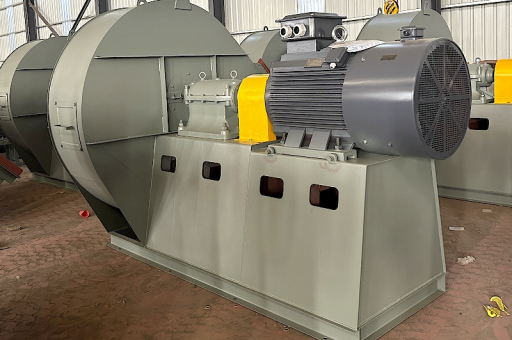
In modern coal-fired and biomass power plants, boiler efficiency and emissions control depend heavily on precise air management. While primary air fans handle coal drying and transport, secondary air fans for power plant boilers are responsible for delivering combustion air directly into the furnace to ensure complete fuel burnout. Without properly functioning secondary air fans, unburned carbon increases, NOx emissions rise, and boiler heat transfer surfaces suffer from slagging and fouling.
According to industry research published by the International Energy Agency (IEA) and technical papers from wind turbine and thermal engineering journals, secondary air flow accounts for 40–60% of total combustion air in a typical pulverized coal boiler. Optimizing this flow can improve boiler efficiency by 1–3%, translating into significant fuel cost savings over a plant’s lifetime.
How Secondary Air Fans Work in a Boiler System
Secondary air fans are typically centrifugal or axial-flow fans located downstream of the air preheater. They draw preheated air (typically 250–350°C) and deliver it through a system of ducts and nozzles into the furnace, often at multiple elevations. This staged combustion strategy helps control flame temperature and reduce thermal NOx formation.
Key functional stages:
- Air intake: Ambient air is drawn through filters and preheated by flue gas in the rotary air preheater.
- Fan pressurization: The secondary air fan increases static pressure to overcome duct resistance and burner nozzle pressure drop.
- Distribution: Air is split into multiple streams—overfire air (OFA), close-coupled overfire air (CCOFA), and burner zone air—to achieve staged combustion.
- Control: Modern plants use variable frequency drives (VFDs) and inlet guide vanes to modulate air flow based on boiler load and oxygen trim signals.
Real-world example: In a 660 MW supercritical boiler, secondary air fans typically operate at 1,500–2,500 kW and deliver 400–600 m³/s of air. A 5% reduction in fan power through VFD optimization can save over 500 MWh annually.
Key Design Parameters and Performance Metrics
When selecting or evaluating secondary air fans for power plant boilers, engineers focus on these critical parameters:
| Parameter | Typical Range | Impact on Performance |
|---|---|---|
| Static pressure rise | 2–5 kPa | Determines air penetration into furnace |
| Flow rate | 200–800 m³/s | Directly affects excess oxygen level |
| Fan efficiency (peak) | 80–88% | Influences auxiliary power consumption |
| Operating temperature | 250–400°C | Material selection (e.g., Corten steel, stainless steel) |
| Speed control range | 30–100% via VFD | Enables turndown without damper losses |
Efficiency optimization strategy: According to a 2023 study in Applied Thermal Engineering, retrofitting fixed-speed secondary air fans with high-efficiency VFDs and aerodynamic impeller designs can reduce fan power consumption by 12–18%, while improving combustion stability at low loads. This is especially relevant for plants integrating wind turbine power output fluctuations that require rapid boiler load changes.
Common Operational Challenges and Solutions
Challenge 1: Erosion and wear
Ash particles entrained in the air stream cause impeller blade erosion.
➡ Solution: Apply ceramic coating or use hardened steel blades. Install erosion shields in the fan casing.
Challenge 2: Vibration from aerodynamic instability
Surge or stall can occur at low flow conditions, especially during startup.
➡ Solution: Implement active surge control via anti-surge valves or recirculation ducts. Use predictive vibration monitoring with accelerometers.
Challenge 3: Temperature excursions
If the air preheater fails, secondary air temperature can drop rapidly, causing thermal shock to fan components.
➡ Solution: Install fast-acting bypass dampers and temperature interlocks to trip the fan if air temperature falls below a safe threshold.
Challenge 4: Duct leakage
Leaks between fan outlet and burners reduce available combustion air and waste fan energy.
➡ Solution: Conduct regular duct pressure tests. Seal all flanged joints with high-temperature gaskets.
Best Practices for Maintenance and Efficiency
To maximize reliability and minimize operating costs, power plant operators should follow these guidelines:
- Weekly inspections: Check bearing temperatures (max 80°C), vibration levels (below 4.5 mm/s RMS), and oil condition.
- Monthly cleaning: Remove ash buildup on impeller blades using compressed air or water washing (if blades are washable).
- Quarterly alignment checks: Verify shaft-to-motor alignment within 0.05 mm to avoid premature bearing failure.
- Annual performance testing: Conduct fan performance curve tests to detect efficiency degradation. Compare actual flow vs. design flow at same pressure.
- Retrofit opportunities: When replacing old fans, consider high-efficiency airfoil blades and VFD + permanent magnet motor combinations for 20–30% energy savings.
Case study: A 500 MW Chinese coal plant replaced its 20-year-old secondary air fans with modern high-efficiency models. The retrofit cost $1.2 million but saved $320,000 per year in electricity, with a payback period of less than 4 years.
Frequently Asked Questions (FAQ)
Q1: What happens if a secondary air fan fails during operation?
A1: The boiler will experience incomplete combustion, leading to increased carbon in ash, higher CO emissions, and possible flame instability. The unit must reduce load immediately to avoid furnace implosion risk. Backup fans (usually 2 × 50% capacity) are automatically started.
Q2: How does secondary air fan design differ from primary air fans?
A2: Primary air fans handle coal-air mixture and require higher pressure (6–10 kPa) but lower temperatures (50–100°C). Secondary air fans operate at higher temperatures (250–400°C) and moderate pressures (2–5 kPa). Material selection and bearing cooling systems differ accordingly.
Q3: Can secondary air fans be integrated with a wind turbine plant control system?
A3: Yes. In hybrid power plants where wind turbine output is variable, the boiler control system must rapidly adjust secondary air flow to maintain stable combustion during wind ramps. VFD-controlled secondary air fans can respond within 2–5 seconds, supporting grid frequency regulation.
Q4: What is the typical lifespan of a secondary air fan?
A4: With proper maintenance, a well-designed fan can last 15–20 years. Impeller replacement may be needed every 5–8 years depending on erosion severity.
Conclusion: Future Trends in Secondary Air Fan Technology
The role of secondary air fans for power plant boilers is evolving alongside changes in the global energy mix. As coal plants increasingly operate in load-following mode to complement intermittent renewables like wind turbine farms, fan systems must be more flexible, efficient, and digitally controlled.
Emerging trends include:
- Digital twin modeling: Using real-time data and CFD to optimize air distribution patterns.
- AI-based predictive maintenance: Machine learning models analyze vibration, temperature, and current signals to predict bearing failure weeks in advance.
- Low-NOx burner integration: Advanced nozzles and air staging designs are reducing NOx to below 100 mg/Nm³ without sacrificing efficiency.
- Waste heat recovery: Some plants are preheating secondary air using low-grade steam to further improve overall boiler efficiency.
For plant managers and engineers, investing in modern secondary air fan technology is not just about reliability—it is a strategic move toward lower emissions, higher profitability, and longer asset life. By combining mechanical best practices with digital innovation, power plants can achieve the combustion precision needed in the era of renewable integration.





