
This article's table of contents introduction:
- The Application: Industrial Boiler Waste Gas
- Why a Single Inlet Centrifugal Fan?
- Key Design Features for Boiler Waste Gas
- Sizing & Selection Parameters (What you need to know)
- Common Types of Fans Used
- Installation & Safety Considerations
- Summary for Your Project
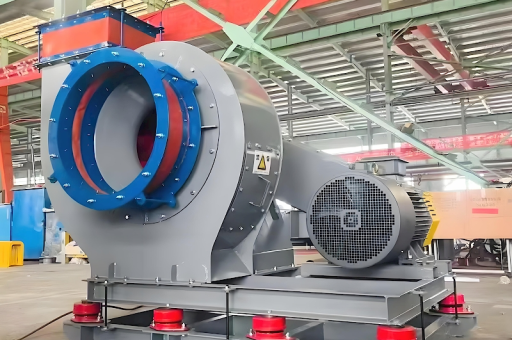
Based on your query, it appears you are looking for information regarding the specifications, application, or selection of a Single Inlet Centrifugal Fan used for Industrial Boiler Waste Gas Collection (likely flue gas, dust, or fume extraction).
Here is a comprehensive breakdown of how this type of fan is used in that specific application, including key design features, selection criteria, and common challenges.
The Application: Industrial Boiler Waste Gas
Industrial boilers (coal, biomass, oil, or gas-fired) produce a waste gas stream characterized by:
- High Temperature: Flue gas can range from 150°C to 250°C (or higher for recovery systems).
- Particulate Matter: Fly ash, soot, and unburned carbon.
- Corrosive Elements: Sulfur dioxide (SOx) and nitrogen oxides (NOx) which form acids when cooled.
- High Volume, Low Pressure: The system typically requires moving large volumes of gas through ducts, scrubbers, and stacks against a moderate resistance (static pressure).
Why a Single Inlet Centrifugal Fan?
There are two main configurations: Single Inlet (SI) and Double Inlet (DI). For this specific duty, Single Inlet is often preferred for the following reasons:
| Feature | Benefit for Boiler Waste Gas |
|---|---|
| Simpler Shaft & Bearing System | Less prone to failure from heat and vibration compared to DI fans (which have longer shafts). |
| Better for Dust Loading | Gas enters from one side only, allowing for a simpler, more effective housing design that resists erosion and buildup. |
| Direct Drive Option | SI fans can be directly coupled to a motor (without belts), reducing maintenance in high-heat environments. |
| Cost-Effective (for lower volumes) | For the capacity typical of a single boiler unit, an SI fan is efficient and less expensive than a large DI fan. |
Key Design Features for Boiler Waste Gas
A standard centrifugal fan will fail quickly in this environment. You need a Heavy-Duty Industrial Fan with these specific features:
-
Wheel Design:
- Backward Inclined / Backward Curved: Most efficient for clean to moderate dust loads. Preferred for energy savings.
- Radial Tip / Paddle Wheel: Best for heavy dust loads (e.g., biomass or coal fly ash). It is self-cleaning but less efficient.
- Material: Often Carbon Steel (standard) or Corten Steel (for high temperatures). Must be thick enough to withstand erosion.
-
Housing (Casing):
- Robust Construction: 3/16" to 1/4" plate steel or thicker.
- Drain / Cleanout Ports: Essential for removing accumulated ash.
- Access Door: For inspection and cleaning without dismantling ductwork.
-
Shaft & Bearings:
- Water-Cooled Bearings: Critical if the gas temperature exceeds 180°C (356°F). The bearing housing is isolated from the fan housing.
- Shaft Seals: To prevent hot, corrosive gas from leaking out and damaging the bearings or the surroundings.
-
Variable Speed Drive (VFD):
- Essential for modern boilers. Allows the fan to ramp up/down based on boiler load (damper demand), saving significant energy and reducing wear.
Sizing & Selection Parameters (What you need to know)
When ordering or specifying this fan, you must provide these values:
- Airflow (CFM or m³/hr): The volume of waste gas the fan must move at full load.
- Static Pressure (in WG or kPa): The resistance of the entire system (ducts, stack, pollution control equipment like baghouses or scrubbers).
- Gas Temperature (°F or °C): This is the most critical parameter. The fan must be rated for the peak operating temperature, not the average.
- Gas Density: Hot gas is less dense than cool air. The fan manufacturer must calculate the actual horsepower required at operating temperature (not standard air).
- Particulate Load (grains/ft³ or mg/m³): Determines the type of wheel (radial vs. backward inclined) and whether an abrasion-resistant lining is needed.
Common Types of Fans Used
- Exhaust Fan: Placed after the pollution control equipment (baghouse or scrubber) to pull gas through the system. This is the most common location.
- Induced Draft (ID) Fan: Placed before the stack but after the boiler. It must handle hot, dirty gas.
- Forced Draft (FD) Fan: Pushes combustion air into the boiler. This is usually a clean air fan, not for waste gas.
Your query implies an "Induced Draft" or "Exhaust" fan for the waste gas stream.
Installation & Safety Considerations
- Isolation Dampers: Install a positive sealing damper (e.g., guillotine or butterfly) on the inlet to allow for safe maintenance.
- Vibration Monitoring: Mandatory. Unbalance from ash buildup is the #1 cause of failure.
- Flexible Connectors: Use high-temperature silicone or fiberglass connectors at the inlet/outlet to prevent thermal expansion stress on the fan.
- Support Base: Must be a heavy-duty welded steel base with sole plates for alignment. Inlet and outlet ducts must be independently supported (DO NOT hang the duct from the fan).
Summary for Your Project
If you are sourcing a Single Inlet Centrifugal Fan for an Industrial Boiler Waste Gas Collecting system, specify:
"A heavy-duty Single Inlet Centrifugal Fan with a [Backward Inclined / Radial] wheel, suitable for [Temperature]°C continuous operation, with a direct drive motor and VFD control, for handling [CFM] @ [Static Pressure]. Must include water-cooled bearings, shaft seals, and a cleanout door."
Next Step: If you have specific values (CFM, temperature, pressure, and particulate type), I can help you determine the exact wheel type or horsepower required.





